
When things are going well, most people do not think about employment law. They do their job, get paid, enjoy holidays, go to the occasional annoying meeting, and proceed to their next task.
When the normal working routine stops, legal problems are likely to be raised. A promise to be promoted never comes through. The behavior of a manager becomes uncomfortable. A manager’s behavior gets increasingly uncomfortable. The situation gets worse after you make a complaint to HR. Or, a long-standing career can end abruptly with a termination notice. Many employees are astonished at how quickly one issue at work can result in another.
When a Workplace dispute doesn’t have an easy name
Take an employee who has been with the same company for seven years. After complaining about a supervisor’s inappropriate remarks the employee begins to notice a change. Meetings are no longer held and the important tasks are taken off. After a few months they lose their job.
Does it constitute a discrimination or harassment issue, reprisal, discrimination, or even dismissal? There could be more than one issue to be considered. People who are facing workplace harassment in Toronto should not assume that the events resulting from an incident were not related. It is important to examine the timeline and specific facts when making a decision about the legal options available.
A Job Can Change Without Being officially ended
Even if an employer does not state “You have been fired” or a significant reduction in wages, a major shift in the description of work, or a massive change in the duties of an employee may leave the employee wondering if they were replaced by something else.
That can lead to questions about constructive dismissal Ontario law. The basis for constructive termination is specific circumstances. The law does not apply to every stressful job, management decision or workplace change qualifies. If an employee is considering resignation due to a major work-related change, they must be careful about assuming that they are the only ones to know.
The Questions You Will Face When You Lose Your Job
If an employment contract ends and the focus is typically on the amount. The query “How much do I need to receive in the event of severance?” may sound straightforward however the answer isn’t always universal. Employment contracts, applicable laws, length of service and compensation, among other factors, can affect an employee’s rights.
A person looking for a lawyer who handles severance payments near me could gain from having the whole ending package analyzed instead of just focusing on the amount of weeks available.
The wrongful dismissal Ontario isn’t just an issue where an employee feels that the decision was arbitrary. Legal review can include determining whether or how the dismissal was fair and also the compensation amount as well as notice given.
Some employees are covered by another legal system
A detail that is often overlooked is the type and size of your employer. The majority of Ontario employees are subject to provincial employment laws. Certain industries, however, are federally-regulated. People working in certain areas like banking, telecommunications, railways and airports might have rights and procedures under federal law.
The unionized employee may also face problems relating to representation rights, human rights and duty of fair representation claims. It is vital to know the nuances of an employment dispute by determining the lawful framework applicable to you.
Employment Law is about the whole relation between the two parties.
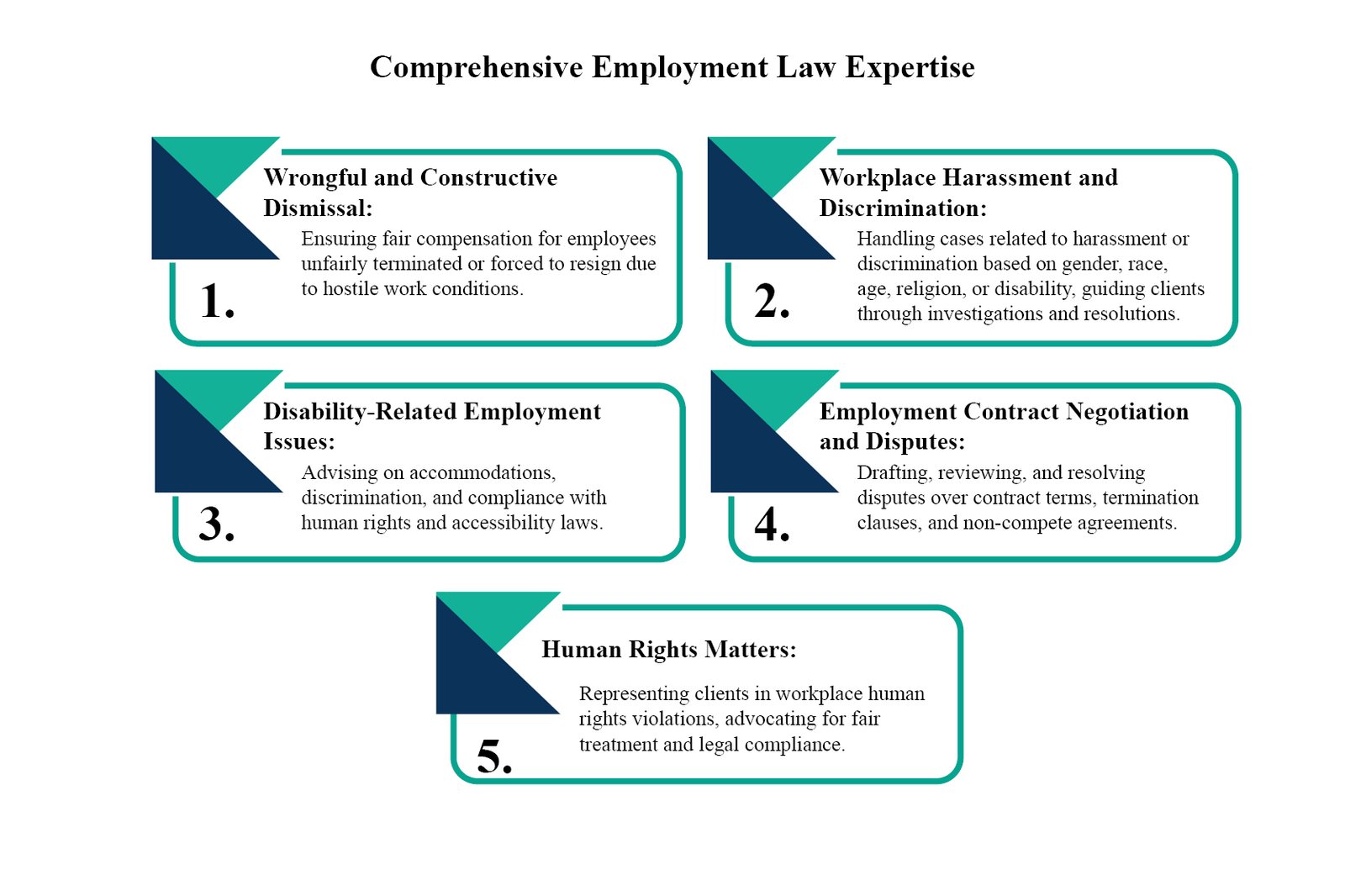
HTW Law has been serving the Greater Toronto Area for over 20 years. It handles the employment law in Ontario. The practice covers dismissal wrongful and constructive as well as workplace harassment, sexual harassing, discrimination repudiations Disability discrimination HRTO/OLRB matters as well as other human rights issues. The firm assists in certain instances involving federally-regulated employees across Canada.
It’s often difficult to categorize workplace disputes. When a dispute begins as a dispute over work conditions can turn into a claim of harassment or even a change of work, and then eventually, termination.
Understanding the connection between those events is as important as knowing what took place on the employee’s final day.